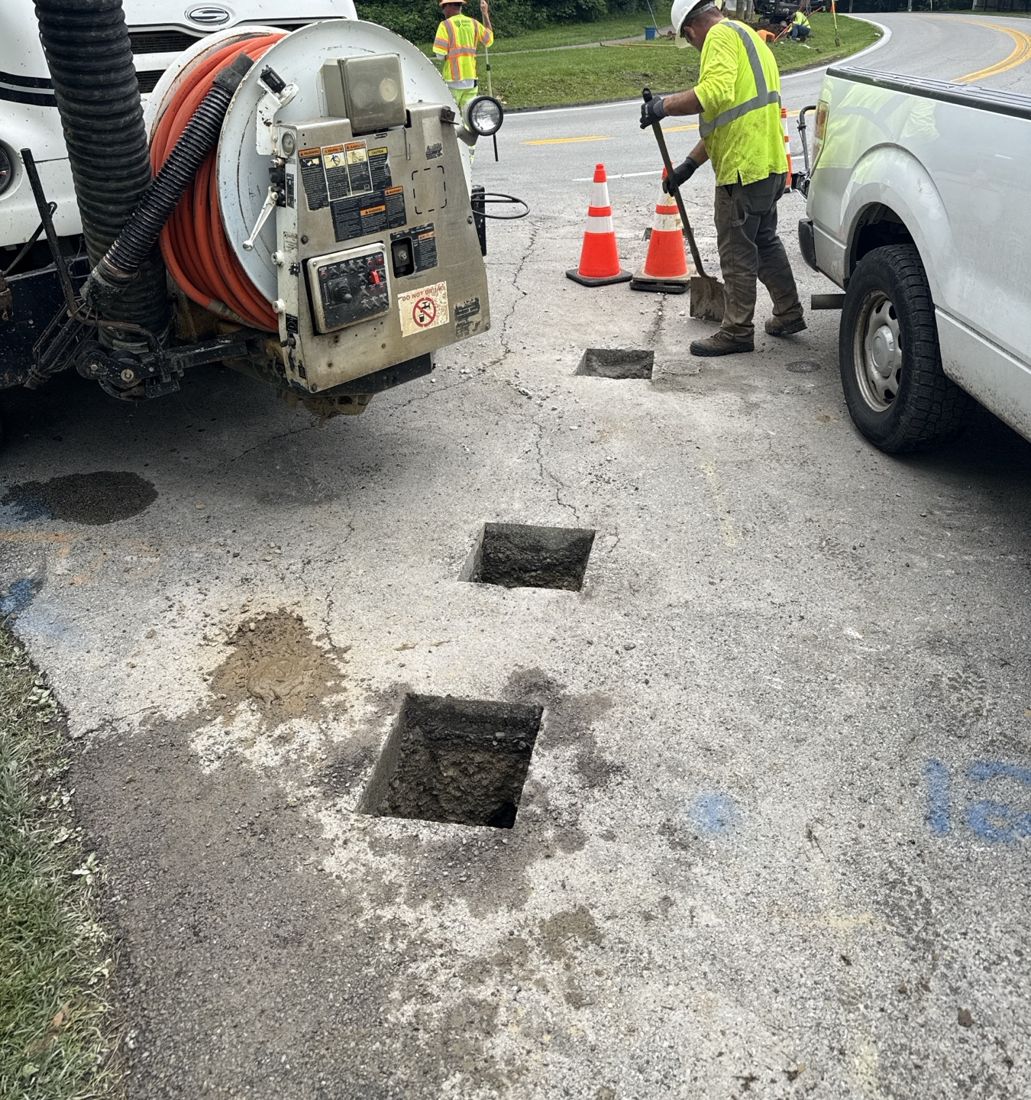
A backhoe is fast, but it's blunt. It can't tell the difference between dirt and the gas line running through it. Hydroexcavation can. It uses pressurized water to break up soil and a vacuum to lift it away, so you dig without ever putting steel against a buried line. Here are five signs your job calls for it.
First, What Hydroexcavation Is
Hydroexcavation, hydrovac for short, is non-destructive digging. A stream of pressurized water loosens the soil while a powerful vacuum pulls the slurry up into a holding tank on the truck. There's no blade and no bucket near the ground. Because water cuts soil but flows harmlessly around a pipe or cable, you can excavate right up to a live utility without the risk that comes with mechanical digging. It's precise, it's controlled, and near buried lines it's the safest way to move dirt.
Sign 1: You're Digging Near Known Live Utilities
If there's a live gas, electric, water, or communications line anywhere near your dig and a strike would be serious, that's the clearest sign of all. A backhoe bucket has no feel, it finds a line by hitting it, and by then the damage is done. Hydrovac removes soil around a line without touching it, so you can work close to something that would be dangerous or expensive to hit. When the cost of a strike is high, the choice is easy.
Sign 2: You Need to Daylight or Pothole Before Boring
Before a bore or a trench crosses an existing utility, you want to know exactly where that utility sits, not roughly, exactly. Daylighting (also called potholing) means digging a small, precise hole to expose a line and confirm its true depth and position. Hydrovac is built for this. It opens a clean window down to the line without harming it, so you can verify what's there and plan the crossing with real clearance instead of a guess on a locate mark.
Sign 3: The Underground Corridor Is Congested
Some routes are crowded, multiple utilities stacked and running side by side in a narrow band. Swinging a bucket into that is asking to hit something. Hydrovac lets you work through a congested corridor carefully, peeling away soil around each line and keeping everything intact. Where mechanical digging is simply too risky, this is often the only responsible way to open the ground.
Sign 4: You Need Precise or Narrow Excavation
Not every dig wants a wide-open hole. Slot trenching, a clean, narrow channel, is far easier with water and vacuum than with a machine. So is excavating tight around footings, foundations, or tree roots you'd rather not tear up. Hydrovac gives you control over exactly how much soil moves and where, which matters when you're working in a confined spot or need to keep the surrounding ground and structures undisturbed.
Sign 5: The Ground Is Frozen or Hard-Packed
Frozen ground and dense, compacted soil fight a mechanical bucket. Hydrovac trucks can run heated water, which cuts through frost and hard-packed material that would otherwise slow the job to a crawl. When the ground is stubborn, water gets through it in a controlled way instead of forcing the issue with brute machinery.
Why It Beats a Backhoe Near Utilities
It comes down to what's doing the digging. A backhoe applies force with steel and finds obstacles by hitting them. Hydrovac applies water, which removes soil but leaves pipes, cables, and roots unharmed. That difference is everything when there's something below you don't want to break. It's safer for the crew, safer for the utilities, and precise enough to dig exactly the hole you need, no more, no less.
None of this means hydrovac is the answer for every dig. Wide-open ground with nothing underground is still a job for a machine. But when any of these five signs shows up, reaching for water instead of a bucket is the call that keeps the job clean.