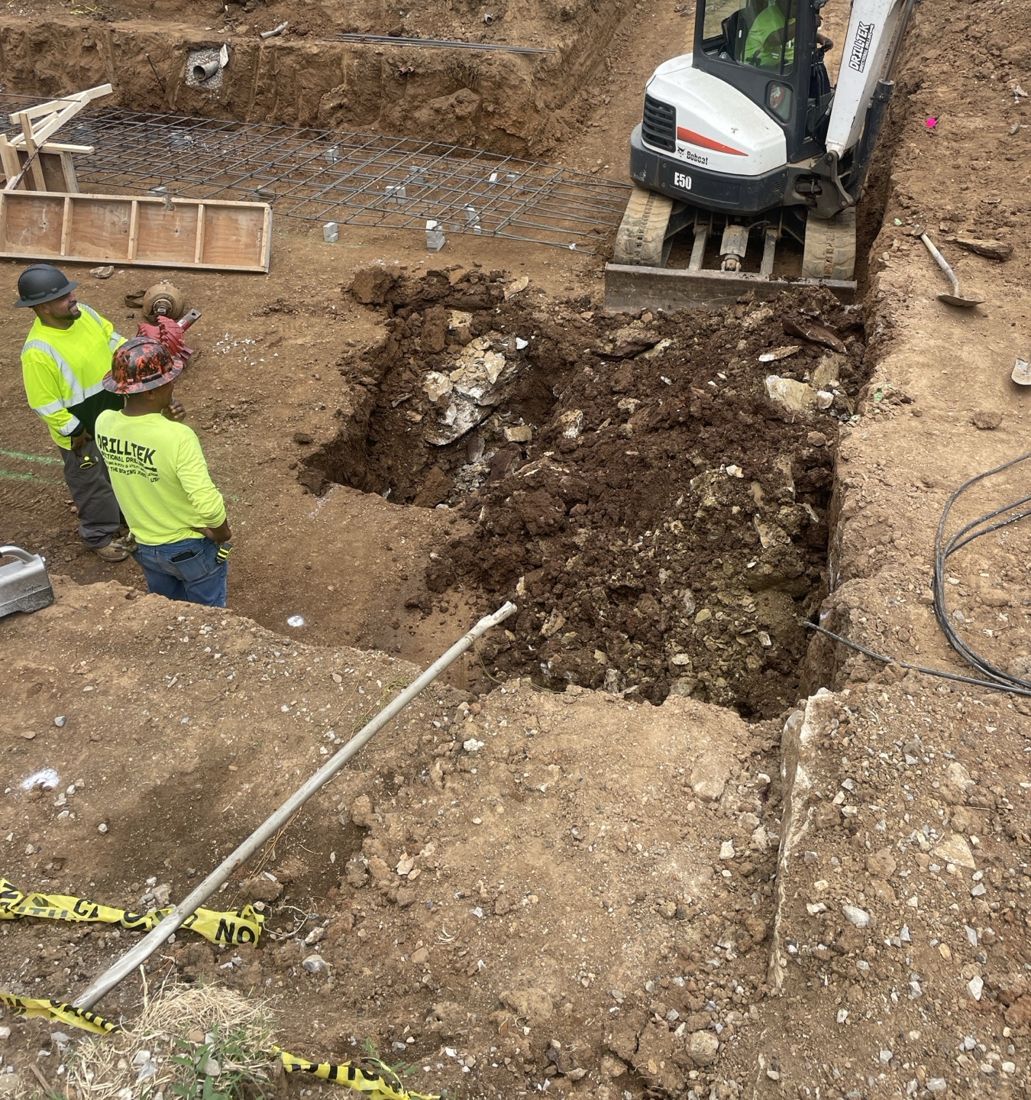
Most of the trouble on a dig is decided before anyone breaks ground. A struck line, a missing permit, a spoil pile with nowhere to go, these are planning gaps, not bad luck. This checklist walks a general contractor through what to lock down before the first cut so the work goes in clean and stays on schedule.
The Pre-Dig Checklist
Run through these in order. Each one clears a risk that's far cheaper to handle now than after the machine is on site.
1. Call 811, Then Get a Private Locate
Start with 811 for public utility locates. It's free, it's required, and it puts the public lines on the ground with paint and flags. But 811 only marks utilities owned by the member operators up to the public connection point, it does not mark everything.
Schedule a private locate for the lines 811 won't touch:
- Service lines past the meter, power, gas, or water running to a building or across a private lot.
- Site lighting, irrigation, and low-voltage or data runs.
- Anything a previous owner or contractor put in without a record.
Wait out the full locate window and confirm every operator has responded before you dig.
2. Confirm Permits and Approvals
Have every approval in hand, not pending, before you mobilize:
- The excavation or utility permit for the work itself.
- Any road or right-of-way permit if the path crosses or runs along a public road.
- Environmental approvals for work near water, wetlands, or protected ground.
Permits often carry conditions, work hours, restoration standards, inspection points, so read them, don't just file them.
3. Mark and Protect the Work Area
Lay out the site on the ground before equipment arrives. Mark the work zone, the access route in and out, and the staging and laydown areas. Set up protection for anything that stays, trees, existing pavement, structures, and put fencing or barricades where the public could wander in. A clearly marked site keeps the crew, the equipment, and everyone else out of each other's way.
4. Identify Overhead and Underground Hazards
Walk the site and look up as well as down. Overhead power lines set clearance limits for any tall equipment. Underground, the located utilities tell you where the pinch points are. Note both:
- Overhead lines, and the clearance the equipment has to keep from them.
- Located utilities that cross or parallel the path.
- Anything that calls for hand digging or hydroexcavation to expose a line safely.
5. Confirm Utility Depths and the Path
Marks on the surface tell you where a line runs, not how deep it sits. Where the bore or trench path crosses an existing utility, confirm the depth, potholing or hydroexcavating to daylight the line is the sure way to do it. Then set your path with real separation above, below, or around each crossing, so the plan reflects the ground instead of a guess.
6. Plan Spoil, Traffic, and Restoration
Decide where everything goes before it comes out of the ground:
- Spoil handling, where cuttings and excavated material are stockpiled or hauled, and how the site drains around it.
- Traffic control, flagging, signage, or lane plans if the work touches a road or a shared drive.
- Restoration, how pavement, curb, and landscaping get put back, and to whose standard.
Restoration is part of the job, not an afterthought. Planning it now keeps it from becoming a surprise cost at the end.
7. Line Up the Crew and Equipment for the Whole Scope
Confirm the people and machines are ready for the entire run before day one, the bore or trench, the excavation, the potholing, and the restoration. The costly gaps come from hand-offs: one crew locates, another bores, a third comes back to close up, and the schedule slips in the seams between them. Fewer hand-offs means fewer places for the job to stall.
One Call, Locate Through Restoration
DrillTek can carry the whole scope so you're not stitching vendors together. Private locates, potholing to confirm depth, the bore or trench, the excavation, and restoration all come from one crew on one schedule. You get a single point of accountability from the first mark to the final grade, and no hand-off is where the ball gets dropped.